

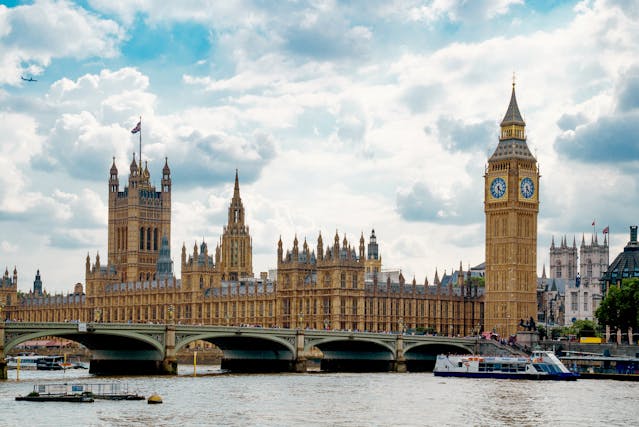
Since the end of the Second World War, just two parties have dominated British politics:
Labour and the Conservatives. For over 70 years they have maintained a vice-like grip on power, talent, and influence — swapping roles between the governing party or the government-in-waiting, enjoying near-constant access to privilege, prestige and the corridors of power.
How have they managed this for so long?
One major reason is the money they have to influence voters or, more correctly. the donations they get from actual benefactors.
Both parties are deeply dependent on powerful financial backers. Labour has historically relied on trade union donations, while the Conservatives are heavily supported by wealthy individuals, fund managers and other corporate interests. These funding streams did not come without strings attached. Inevitably, party priorities bend towards the interests of those who bankrolled them – whether it is for protecting profits or increased wage demands.
This apparent conflict – unions versus business – has paradoxically helped sustain the status quo for decades. Each side claims to be the only political body able to outsmart the other, yet together they lock the system in place.
But there is a cost. That cost is trust.
Ask yourself honestly: how much does the British public trust the Labour or the Conservative party right now? The answer for many voters is probably very little.
Whoever wins the next election, their first unspoken obligation is to satisfy their backers. Any promises made to the electorate that voted them in are all, too often, quickly forgotten.
Ongoing global conflicts, economic shocks, and endless other distractions provide ongoing and convenient cover ups – helping them to explain away broken promises and delayed/abandoned reforms. Tossing the coin at the next election, hoping for substantial change through the other party, never delivers the required results. It is obvious, if you cannot trust either of two the big two parties you must consider a change in direction.
Revelations made by Mark Carney at the January 2026 Davos summit, exposed the current political global crisis we face. Today, superpowers now treat middle or smaller nations with open contempt. British voters understand this international chaos and our so called ‘special relationship’ with Trump’s administration. So, within the UK, wet must start to focus on local issues and building new relationship with potential trading partners.
The local elections quickly approaching in the UK on May 2026, provides UK voters with a genuine turning point for change. Consider turning your backs on the existing status quo situation and explore entirely new opportunities. Stunning possibilities and exciting new directions might be possible.
The two newest parties are:
Reform – headed by Nigel Farage
Green party – lead by Zack Polanski.
Both party’s face the same fundamental challenge: running elections are expensive. Without wealthy backers, it is hard to compete fairly on a level playing field. Council elections are, however, significantly less costly. Results can however be measured locally.
In the long term, every voter needs answers to two big questions before casting future votes:
- Who really funds each party and how much do the donors contribute? What will be demanded in return?
- If a party is without serious financial backers, how does it stay in the race – and what compromises must be accepted – by party and its supporters?
The short run, newer parties can compete more effectively through their network of local voluntary support.
Currently, Farage is winning lots of support in the media, including attracting some senior Conservative MP defectors, siting ‘Britain is Broken’ as their true cause for switching allegiance.
The Green Party has also seen a recent increase in media coverage including representation on Question Time and an important CNN podcast conducted by Zack Polanski for US TV. The Greens have also attracted several disillusioned labour party MP’s – their claim being labour is simply not radical enough – just the same old ‘toryism’ values dressed up again!
The two party’s difference’s in political thinking is striking – far right or more left – it couldn’t be any easier to make a reasoned choice.
The Labour party also recently blocked Andy Burnham from standing as an MP for Gorton & Denton in Manchester. You might well ask Nigel Starmer if he’s also abandoned democratic values? Powerful backer’s and major infighting within Labour, appears to completely overshadow ‘best practice’ and what is best for the country. Starmer’s allegiance with Trump is also very questionable.
So, what about the Conservatives? The Johnson/Truss combination combined spectacularly to seal their fate. The comments of a recent defector – Suella Braverman – it says it all!
https://www.youtube.com/watch?v=oDky-Fs1tCo
My advice is simple: it is time to give alternative parties a fair hearing, but tread carefully.
In making your choice, please look at data published by Donation Watch UK first. You will be shocked!
https://donation.watch/en/unitedkingdom/2025-2029/donors
The choice on 7 May 2026 belongs to every voter.
Choose carefully.
Do not be afraid to give change a chance. Following the outcomes from the May elections, start to examine your own local council decisions carefully, whatever your final vote. At the next General Election, you may then be able to vote in our next leaders with a lot more confidence. The May local elections provide a terrific opportunity to test the newcomers and hopefully start to rebuild trust and confidence in UK politics.
Good luck.
In my view, the Green Party stands out as the party with the least historical baggage — and, therefore, the greatest freedom to elevate critical local council decisions into first place.
Donations pouring into Reform may explain why it constantly grabs the headlines. What traps might then be uncovered if too successful?
The Greens are fiercely independent and community led. Their funding reliance is mainly through individual donations. This empowers it to focus on what matters most – important local issues.
Results build trust. Ask the people in the Bristol area or
throughout Eastern England